Cryptnox SA
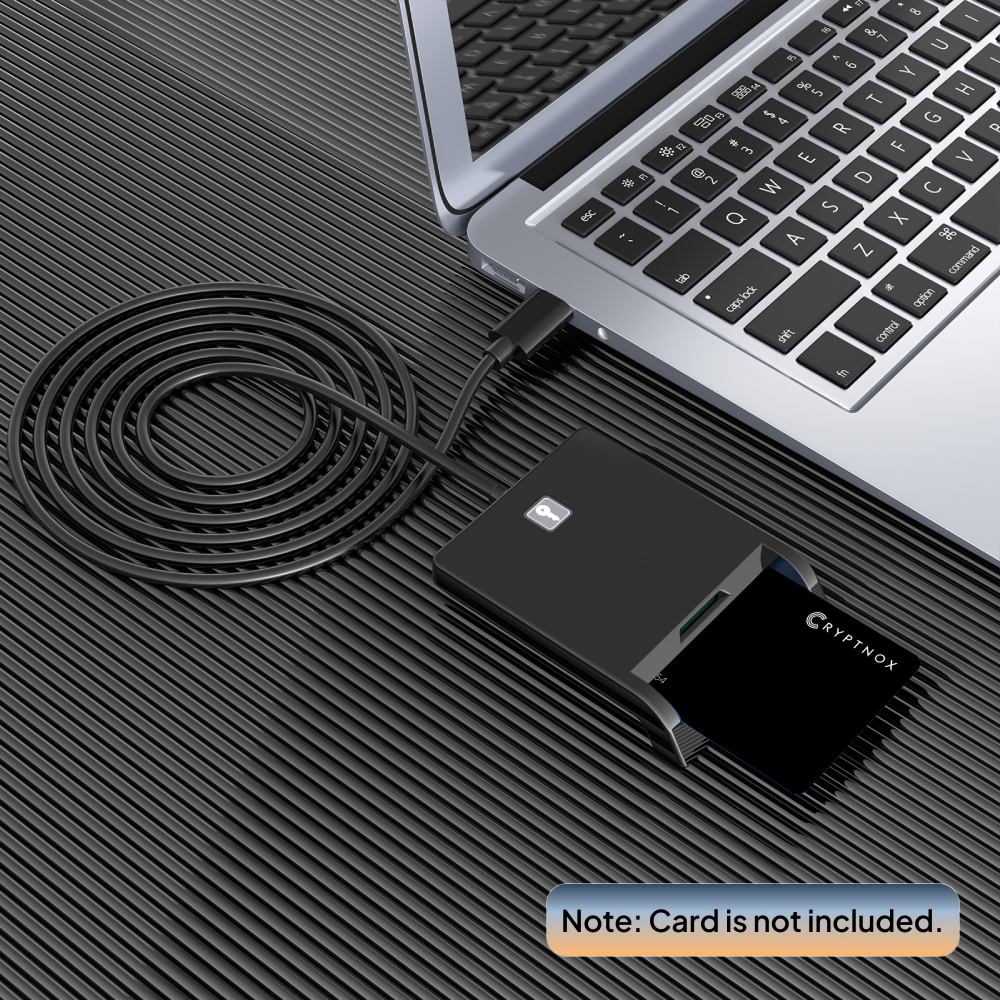
The Cryptnox dual-slot USB-C smart card reader is a premium, general-purpose contact reader for ISO 7816 smart cards. Use it with FIDO2 security keys, U.S. government PIV cards, U.S. DoD CAC cards, European eID cards, OpenPGP cards, EMV chip cards for testing and development, and Cryptnox FIDO2 or hardware wallet cards. It connects natively over USB-C and includes a plug-on USB-A adapter for legacy ports.
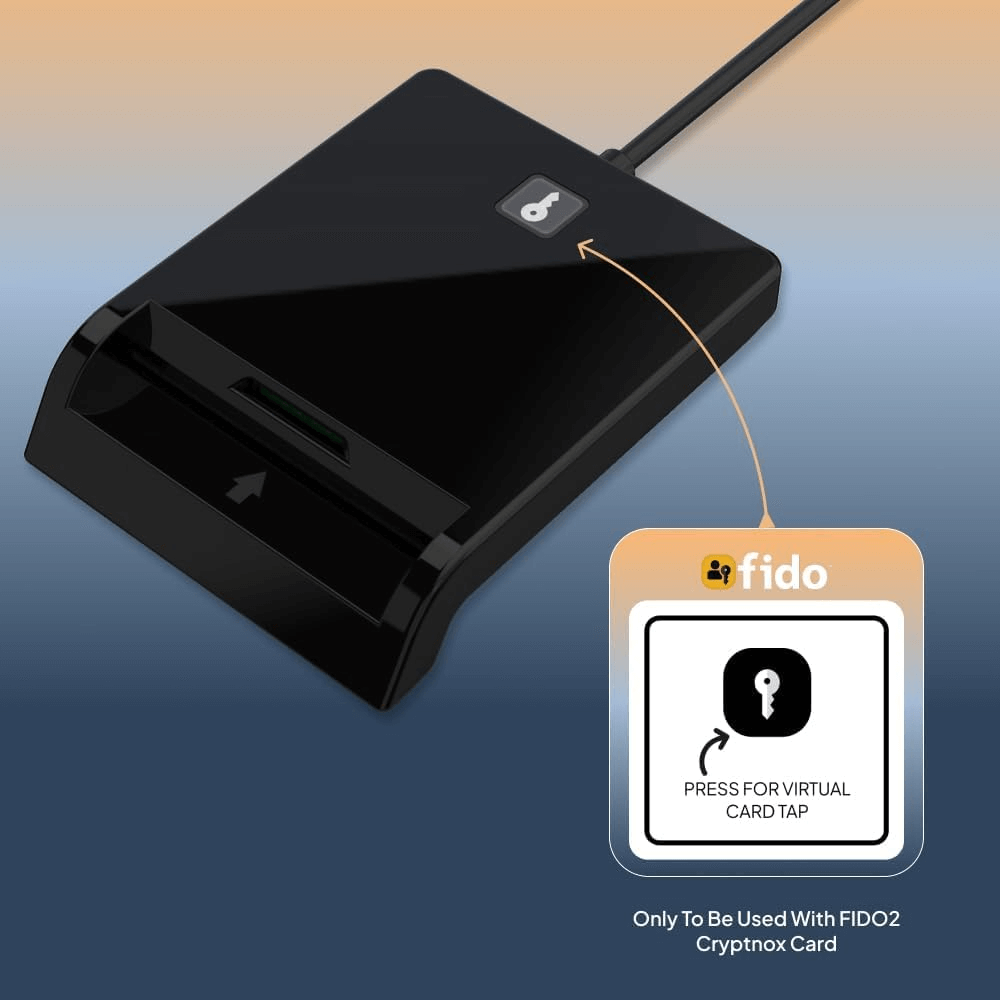
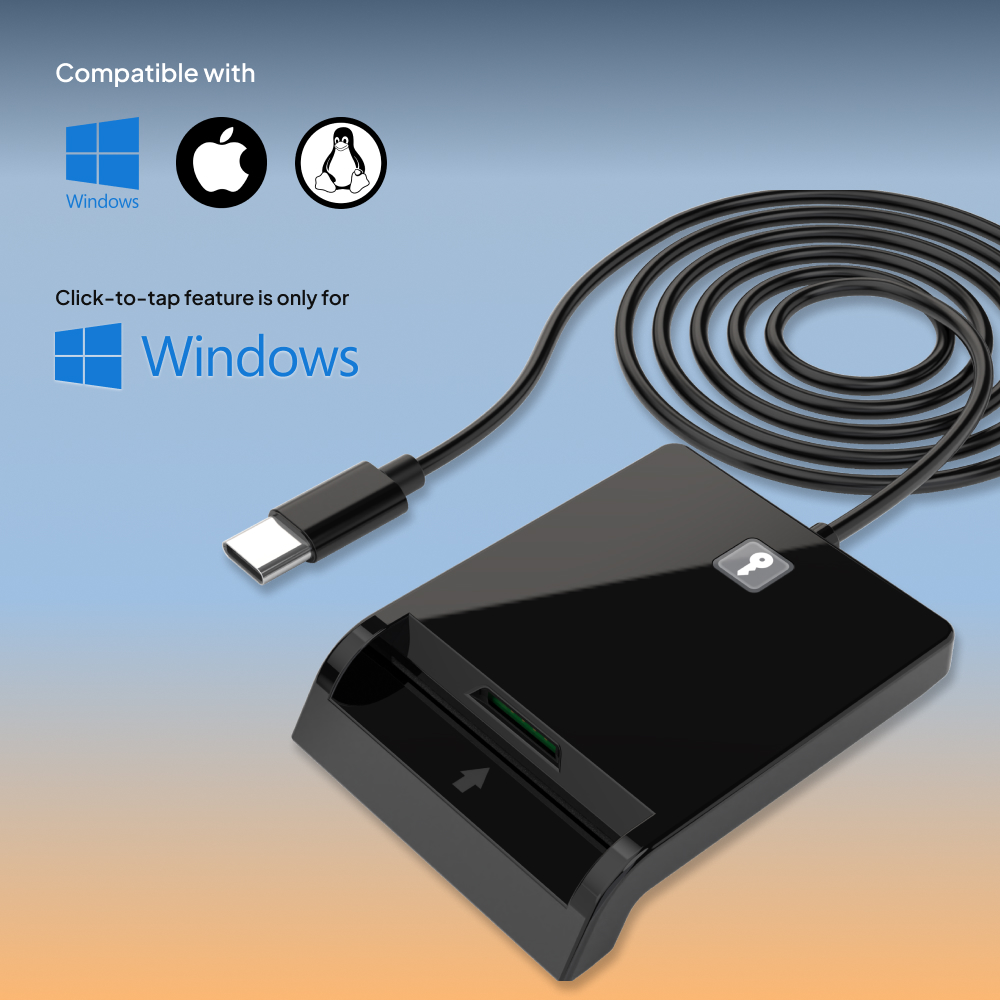
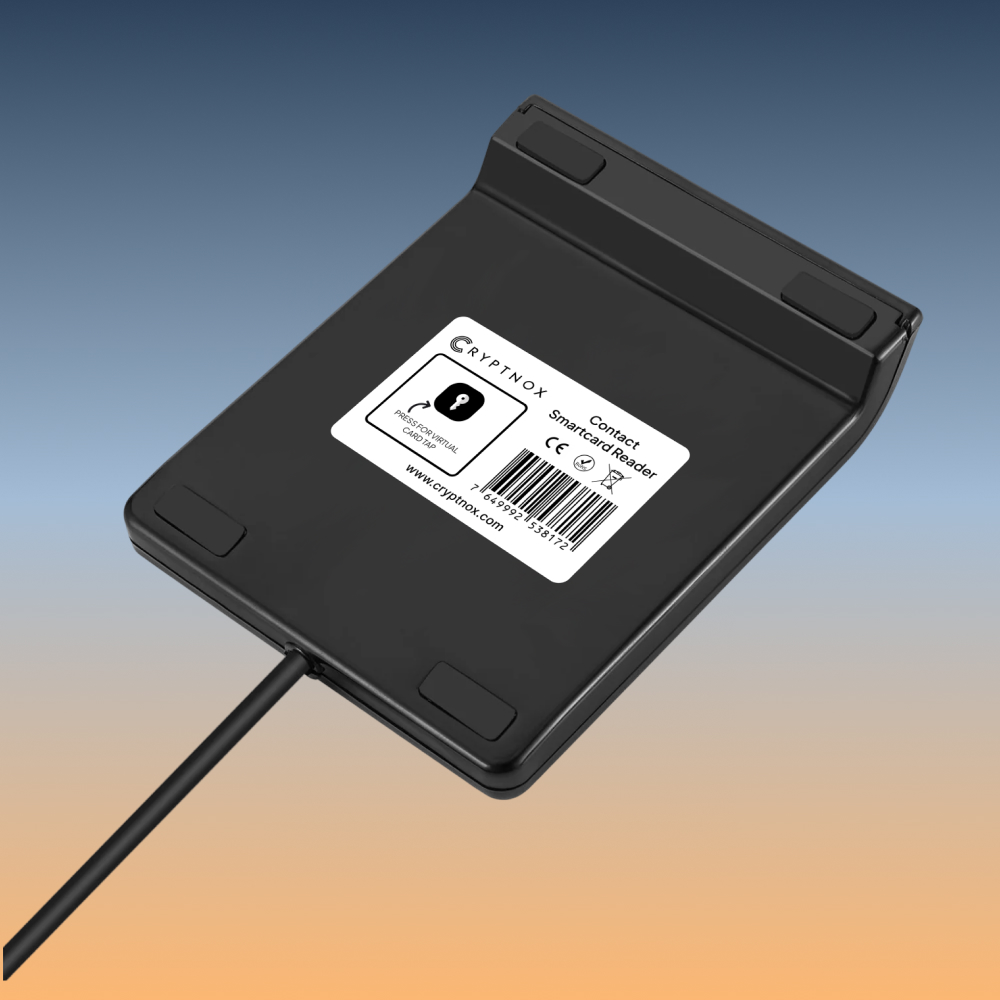
The reader works as a standard USB CCID / PC/SC device on Windows, macOS, Linux, and ChromeOS, with a full-size card slot plus a SIM-size slot for development and embedded-security workflows. As an exclusive bonus, Cryptnox adds the patent-pending Click-to-Tap workflow: the hardware button simulates card removal/reinsertion for FIDO2 sign-in, but it requires Cryptnox FIDO2 smart cards and works natively on Windows, or on Linux with the open-source Cryptnox FIDO2 HID bridge (macOS not yet supported).
CHF 13.91
Tax included. Shipping calculated at checkout.
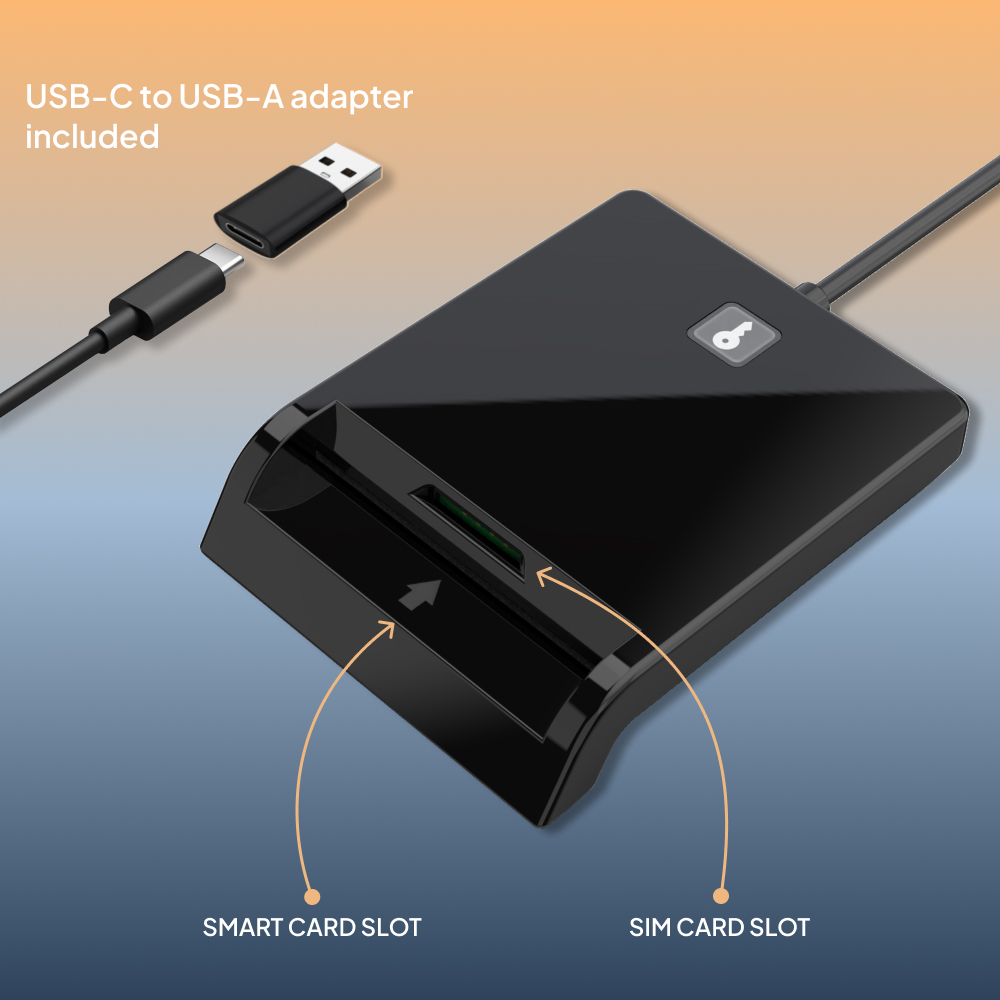
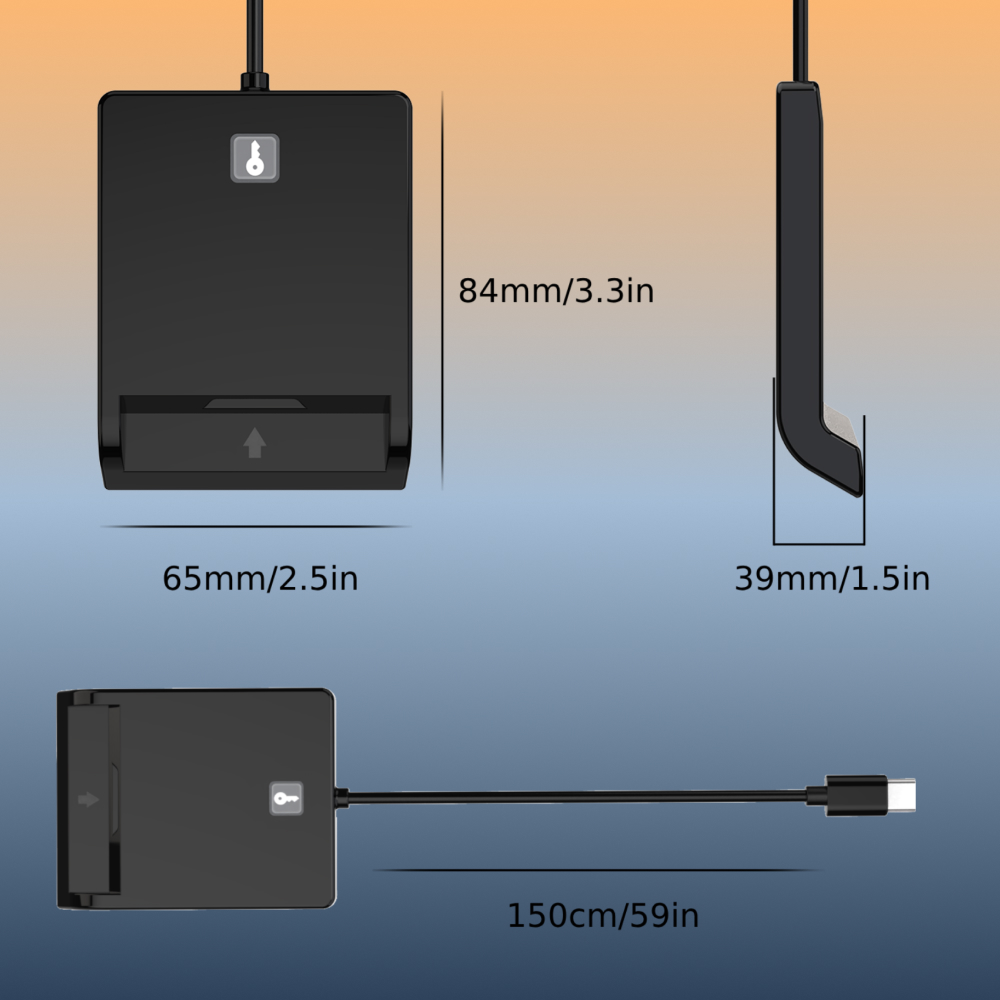
The Cryptnox dual-slot USB-C smart card reader is built for people who need one reliable contact reader for many smart card workflows: FIDO2 security keys, U.S. government PIV cards, U.S. DoD Common Access Cards (CAC), European eID cards with an ISO 7816 contact interface — such as Personalausweis, Belgian eID, French CNIE and Swiss IdentityCard (used via their contact interface; the appropriate software middleware is required per country), OpenPGP / GnuPG cards, corporate PKI cards, EMV chip cards for testing and development, and Cryptnox FIDO2 or hardware wallet cards. The full-size slot accepts standard ID-1 / CR80 cards, while the second slot accepts SIM-format ID-000 cards for developer and embedded-security use cases.
It connects natively by USB-C, includes a plug-on USB-A adapter for legacy USB-A ports, and operates over USB 2.0. The reader works as a standard CCID device on Windows, macOS, Linux, and ChromeOS. It is a pass-through USB CCID / PC/SC reader: it does not contain a secure element, does not store keys, and does not perform signing by itself. Cryptographic operations, identity functions, authentication, and application behavior depend on the inserted smart card, its middleware, and the host software.
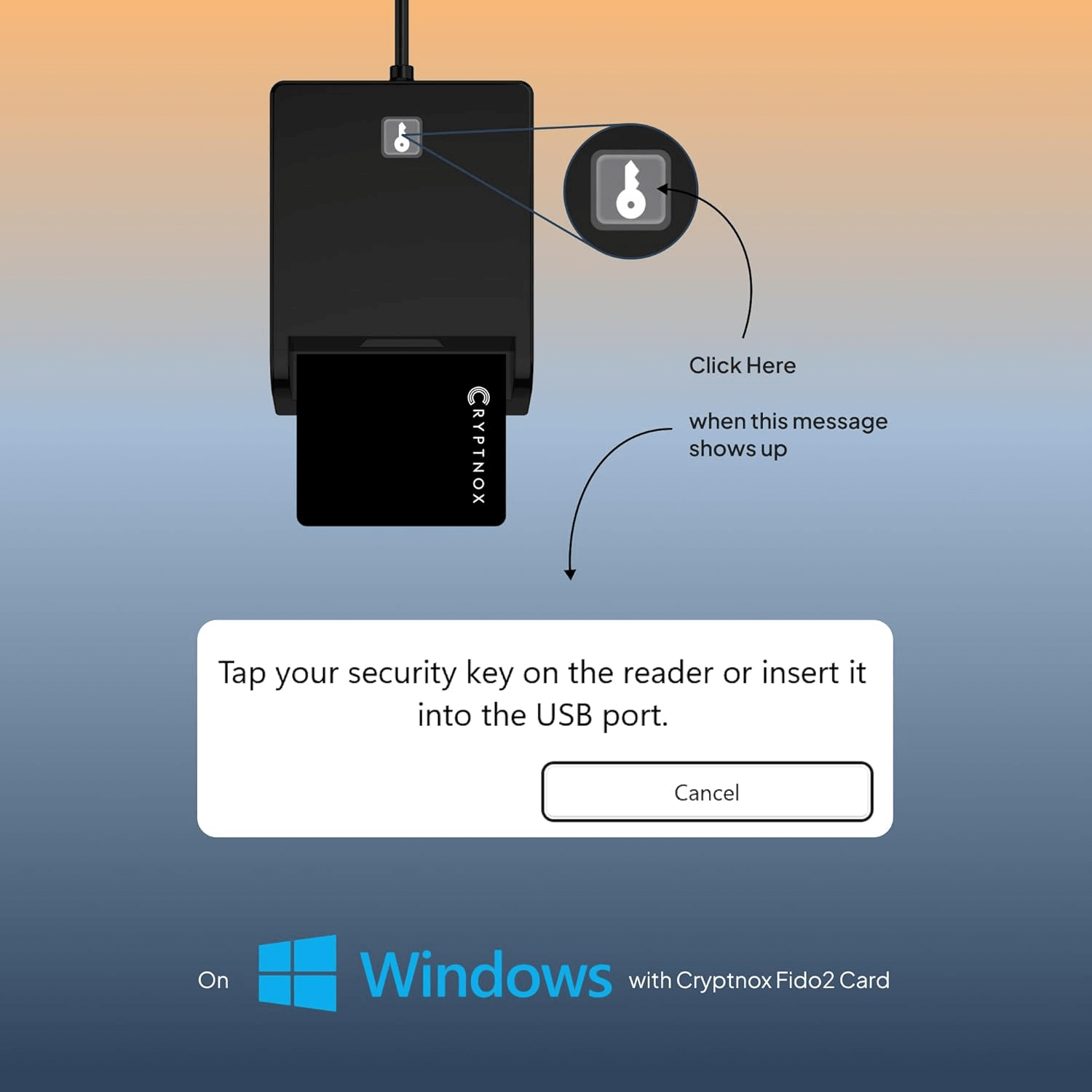
On top of standard CCID compatibility, Cryptnox adds an exclusive premium workflow for FIDO2 users. The patent-pending Click-to-Tap button electronically simulates card extraction and reinsertion when a FIDO2 service asks you to “tap” your security key, so the card can stay in the slot. Click-to-Tap requires Cryptnox FIDO2 smart cards. It works natively on Windows, and on Linux with the open-source Cryptnox FIDO2 HID bridge; macOS is not yet supported. With other cards or unsupported operating systems, the device remains a standard dual-slot CCID smart card reader.
Most users only need the full-size slot. The SIM slot is useful for developers, telco engineers, and anyone working on small-form-factor smart card chips.
FIDO2 contact-mode sign-in normally requires you to physically remove and reinsert the card every time a service prompts you to “tap your security key.” The Cryptnox Click-to-Tap reader’s hardware tap button electronically simulates that extraction-and-reinsertion event — press the button when prompted, the card stays seated in the slot, and FIDO2 sign-in completes in a fraction of the time. Click-to-Tap requires Cryptnox FIDO2 smart cards. It works natively on Windows, and on Linux with the open-source Cryptnox FIDO2 HID bridge; macOS is not yet supported. With other operating systems or cards, the reader functions as a standard PC/SC contact card reader for any ISO 7816 card.
Cryptnox-engineered Swiss firmware. The Click-to-Tap virtual-button signaling is custom Cryptnox technology layered on top of the standard USB CCID interface — registered as utility models in Austria (GM55114/2025) and Germany (No. 202025108028.1), with a U.S. patent application pending (No. 19/534.472). The CCID controller chip itself is a commodity third-party component; the Click-to-Tap button logic is the Cryptnox proprietary contribution.
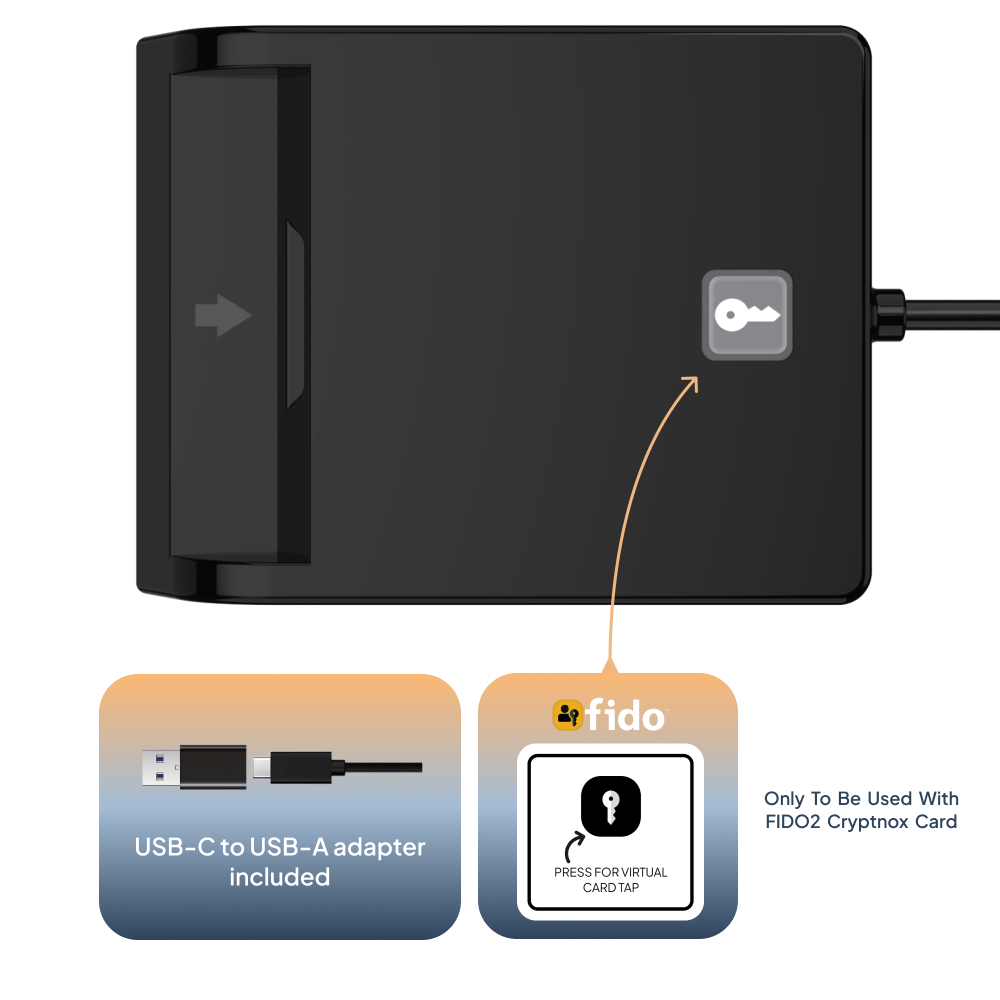
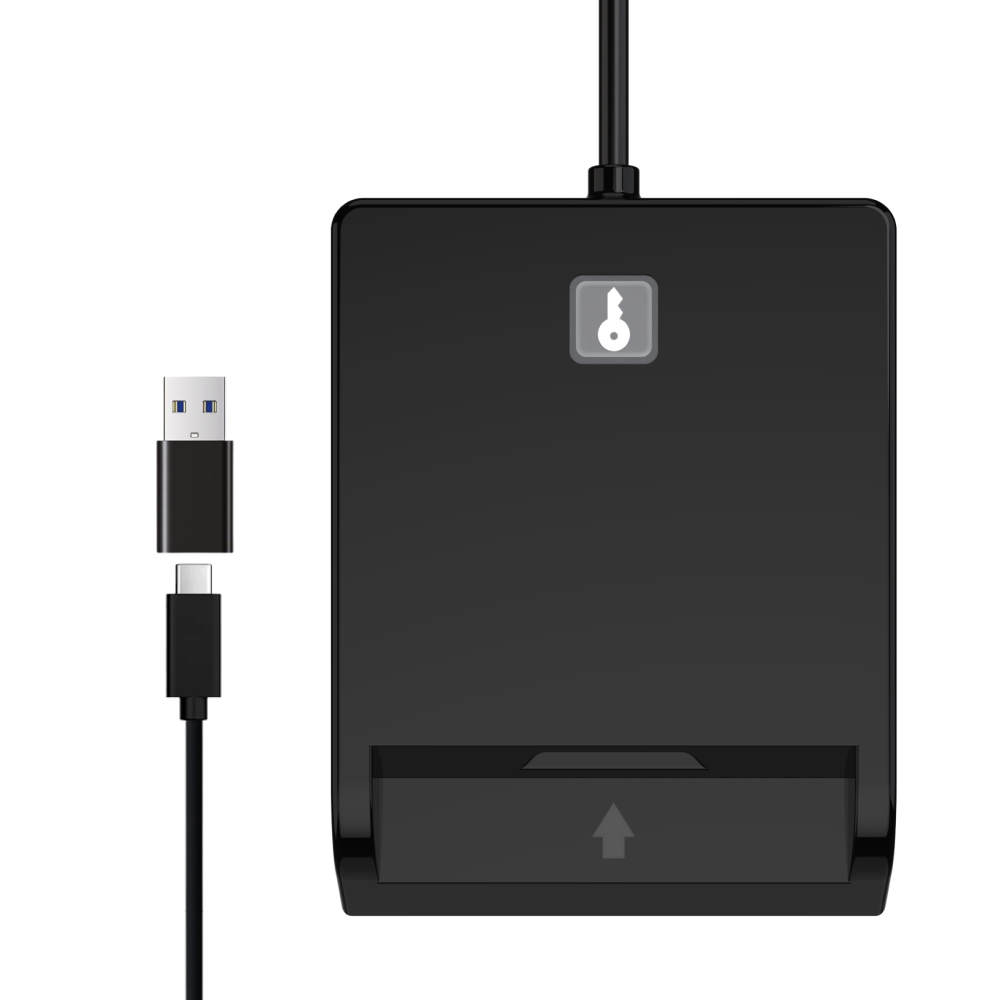
The reader connects via USB-C, which works with modern laptops and USB-C docking stations. A USB-C-to-USB-A adapter is included for compatibility with older USB-A computers. USB CCID class-compliant, so no Cryptnox-specific drivers required on Windows, macOS, or Linux.
Android compatibility via the Cryptnox Wallet app. Compatible with the Cryptnox Wallet app on Android via USB OTG, as an alternative to the phone’s built-in NFC — useful when the phone’s NFC antenna placement is awkward or the contactless tap is unreliable. Note: “Allow USB mode” must be enabled in the expert settings of the Cryptnox Wallet App.
A smartcard reader is a USB device that bridges a contact smart card to your computer, so software like Windows Sign-in, FIDO2 browsers, banking apps, and PKI middleware can talk to the chip. Without a USB contact reader, a smart card can only be used from a phone if the card also has an NFC/contactless interface, and not all smart cards do. The Cryptnox Click-to-Tap reader uses the standard ISO 7816 + USB CCID + PC/SC 2.0 interface that every modern OS supports natively.
For setup walkthroughs and configuration guides, browse our card reader tutorials hub.
FIDO2 sign-in via a contact reader normally requires you to physically remove and reinsert the card every time the service asks you to “tap your security key.” This adds friction for users who sign in many times per day on services like Microsoft Entra ID or Google Workspace.
The Cryptnox Click-to-Tap reader has a dedicated tap button on the reader body that electronically simulates card extraction and reinsertion. Press the button when prompted and the card stays in the slot. The Click-to-Tap virtual button requires Cryptnox FIDO2 smart cards. It works natively on Windows; on Linux it works through the open-source Cryptnox FIDO2 HID bridge. macOS is not yet supported. On unsupported platforms or with other cards, the reader functions as a standard CCID device.
pcscd + libccid + opensc packages once and the reader is ready as a standard CCID device. For Cryptnox FIDO2 cards (including Click-to-Tap), also install the open-source Cryptnox FIDO2 HID bridge.Connects via USB-C to modern laptops and USB-C docking stations. A USB-C-to-USB-A adapter is included in the box for older USB-A-only computers.
If you have a Cryptnox FIDO2 card and want to use it from a desktop browser without NFC, the Cryptnox Click-to-Tap reader is the recommended choice on Windows because of the tap button. On Linux, install the open-source Cryptnox FIDO2 HID bridge to enable FIDO2 sign-in with Cryptnox FIDO2 cards (Click-to-Tap also works on Linux through the bridge). On macOS, the reader works for FIDO2 sign-in but Click-to-Tap is not yet supported. As an alternative on any platform, pair with the Cryptnox NFC Reader for NFC-based FIDO2 sign-in.
USB-C dual-slot CCID smart card reader. No vendor driver required — Windows / macOS / ChromeOS use built-in stacks; many Linux distributions require installing pcscd / libccid / pcsc-tools first. ISO 7816 contact, FIDO2-ready. USB-C-to-USB-A adapter included. 2-year warranty.
| USB connector | USB-C — USB-C-to-USB-A adapter included in the box |
|---|---|
| USB version & speed | USB 2.0 Full Speed (12 Mbps), USB-IF certified |
| USB device class | USB CCID (Chip Card Interface Device) — no vendor driver required; Windows/macOS/ChromeOS use built-in stacks, Linux uses the OS’s PC/SC packages (pcscd / libccid) |
| Operating-system support | Windows 10 / 11, macOS, Linux, ChromeOS — uses each OS’s native PC/SC stack (Linux distributions typically need pcscd/libccid/pcsc-tools installed). Android (USB OTG): compatible with the Cryptnox Wallet app on Android via the USB-C connector (USB OTG), as an alternative to the phone’s built-in NFC. |
| Microsoft WHQL | Yes — controller is WHQL-certified for Smart Card Reader requirements |
| Card standard | ISO/IEC 7816 contact smart cards |
|---|---|
| Card classes | Class A (5 V), Class B (3 V), Class C (1.8 V) — all three voltages |
| Transmission protocols | T=0 and T=1 |
| APDU support | Short APDU and Extended APDU (FIDO2 attestation, RSA-2048 signing, large secure-channel payloads) |
| Card slots | 1 × full-size ISO 7816 contact slot + 1 × SIM-format slot (ID-000 / 2FF; smaller form factors with a suitable adapter) |
| EMV compliance | EMV-compliant chip-card reader (chip-level) |
| Click-to-Tap virtual button | Yes — Cryptnox FIDO2 cards only; Windows native, Linux via Cryptnox FIDO2 HID bridge; macOS not yet supported (setup tutorial) |
|---|---|
| FIDO2 / WebAuthn | Yes — works as a contact FIDO2 reader for Cryptnox FIDO2 smart cards |
| U.S. DoD CAC / PIV | Yes — works with the standard CAC + PIV infrastructure (DoD PKI, ActivClient, MilitaryCAC, opensc-pkcs11). The USB-C alternative to the Cryptnox Mini CAC reader for modern USB-C-only laptops (MacBook, Surface, recent Dell / HP / Lenovo). |
| PC/SC stack | PC/SC 2.0 (Windows WinSCard, macOS CryptoTokenKit, Linux pcsc-lite) |
| API support | PC/SC (Windows WinSCard, macOS CryptoTokenKit, Linux pcsc-lite); PKCS#11 support depends on the inserted card and compatible middleware |
| Typical applications | FIDO2 / WebAuthn, EMV chip-card reading where supported by compliant software, eID / national ID (contact interface only — Personalausweis, DNIe, CIE, Belgian eID, Estonian eID; software middleware required), U.S. PIV, U.S. DoD CAC, PKI authentication, electronic signature |
| Card power output | Class A/B/C card power (5 V / 3 V / 1.8 V); hardware over-current cutoff at 500 mA |
|---|---|
| Reader power draw | ≈33 mA idle / ≈41 mA reading / 380 µA suspended |
| USB power management | USB selective suspend, USB LPM (Link Power Management), remote wake on card insert / remove |
| Operating environment | standard indoor office use |
| Country of origin | Made in China |
|---|---|
| In the box | Click-to-Tap reader (USB-C), USB-C-to-USB-A adapter |
| Warranty | 2 years |
| CE — EMC | Certificate of Compliance BSTXD210115976601EC. EMC Directive 2014/30/EU; standards EN 55032, EN 55035, EN 61000-3-2, EN 61000-3-3. Test report BSTXD210115976601ER. |
|---|---|
| FCC | Supplier’s Declaration of Conformity (SDoC) under FCC Part 15 Class B. Test report BSTXD210115976602ER. SDoC is the FCC self-certification framework for unintentional radiators — it is not a granted FCC ID. Granted FCC IDs are reserved for intentional radiators (transmitters); a passive contact card reader does not require one. |
| RoHS | Certificate of Compliance BST210115976601CC. RoHS 2 Directive 2011/65/EU as amended by EU 2015/863 + EU 2017/2102 (full 10-substance restriction list). |
The Click-to-Tap virtual button is unique to Cryptnox. Cryptnox’s proprietary, patent-pending Click-to-Tap feature differentiates this reader from standard commodity USB CCID readers: every commodity USB CCID reader can read FIDO2 contact cards, but the Cryptnox reader lets you complete the FIDO2 “tap your security key” prompt by pressing a dedicated button on the reader body — no physical card removal, no reinsertion, no friction.
The Click-to-Tap virtual-button signaling is Cryptnox-engineered Swiss firmware layered on top of the standard USB CCID interface — registered as utility models in Austria (GM55114/2025) and Germany (No. 202025108028.1), with a U.S. patent application pending (No. 19/534.472). The CCID controller chip itself is a commodity third-party component; the Click-to-Tap button logic is the Cryptnox proprietary contribution.
Click-to-Tap requires Cryptnox FIDO2 smart cards. It works natively on Windows and on Linux with the open-source Cryptnox FIDO2 HID bridge; macOS is not yet supported. See the Click-to-Tap virtual button tutorial for the full FIDO2 sign-in workflow.
A smart card reader is a USB device that bridges a contact smart card to your computer, so software like Windows Sign-in, FIDO2 browsers, banking apps, and PKI middleware can talk to the chip. Without a USB contact reader, a smart card can only be used from a phone if the card also has an NFC/contactless interface, and not all smart cards do. With this reader plugged in via USB-C, you can use FIDO2 security keys in card form, Cryptnox hardware wallet cards on a desktop, national eID / PKI smart cards, and any other ISO 7816 contact smart card. On Linux, FIDO2 sign-in with Cryptnox FIDO2 cards requires the open-source Cryptnox FIDO2 HID bridge.
Yes. The reader is a standard USB CCID / PC/SC contact smart card reader for ISO 7816 cards on Windows, macOS, Linux, and ChromeOS, subject to the card middleware and applications required by your organization or country. Supported use cases include U.S. government PIV, U.S. DoD CAC, European eID cards with an ISO 7816 contact interface — such as Personalausweis, Belgian eID, French CNIE and Swiss IdentityCard (used via their contact interface; the appropriate software middleware is required per country), OpenPGP / GnuPG cards, FIDO2 security keys, EMV chip cards for testing and development, and Cryptnox FIDO2 or hardware wallet cards. On Linux, using Cryptnox FIDO2 cards for FIDO2 sign-in (including Click-to-Tap) requires the open-source Cryptnox FIDO2 HID bridge. Click-to-Tap requires Cryptnox FIDO2 smart cards. It works natively on Windows and on Linux with the open-source Cryptnox FIDO2 HID bridge; macOS is not yet supported.
On Linux, FIDO2 sign-in with Cryptnox FIDO2 smart cards — including Click-to-Tap — uses the open-source Cryptnox FIDO2 HID bridge — install the bridge, plug in the reader with a Cryptnox FIDO2 card, and the tap button is recognised the same way it is on Windows. On macOS, Click-to-Tap is not yet supported; the reader still works as a standard PC/SC contact smart card reader for any ISO 7816 card, just without the Click-to-Tap workflow. Windows has native Click-to-Tap support and does not require any additional software beyond a Cryptnox FIDO2 card.
Cryptnox makes two USB-C readers, each for a different physical interface:
Compared to other CCID readers (Identiv SCR3310, HID OMNIKEY 3121, Broadcom 5880, etc.): all are USB CCID class-compliant, so standard PC/SC software works across them. The Cryptnox reader is differentiated by the FIDO2-specific tap button, the dual-slot (full-size + SIM-size) design, and the USB-C connector — many common commodity CCID readers are single-slot USB-A readers and do not include a Click-to-Tap button, requiring physical card removal and reinsertion on every FIDO2 prompt.
Decision rule:
The reader handles both standard ISO 7816 card form factors:
Most users only need the full-size slot for daily card use. The SIM slot is most useful for developers, telco engineers, embedded-security work, and anyone building or testing applets on small-form-factor smart card chips. Both slots use the same ISO 7816 contact protocol and share a single USB CCID interface, so only one card can communicate at a time — when both slots are populated, switch between them by removing the inactive card (or by app/middleware control where supported).
Yes — the reader is USB CCID class-compliant, so it uses the OS’s built-in smart card stack rather than any Cryptnox-specific driver:
pcscd, libccid, and pcsc-tools are not preinstalled on most distributions, so install them first:sudo apt install pcscd libccid pcsc-toolssudo dnf install pcsc-lite pcsc-lite-ccid pcsc-toolssudo pacman -S pcsclite ccid pcsc-toolsOnce installed, pcsc_scan should detect the reader immediately. For FIDO2 sign-in with Cryptnox FIDO2 cards (and for Click-to-Tap), also install the open-source Cryptnox FIDO2 HID bridge. If you’re seeing “Broadcom USBCCID Smartcard Reader (WUDF)” or “Microsoft USBCCID Smartcard Reader (WUDF)” in Windows Device Manager — that’s the standard generic CCID driver, exactly the right driver. No third-party software download is required.
Any contact smart card following the ISO 7816 standard fits one of the two slots and works through the OS’s built-in smart card stack:
Cryptnox cards (designed pair):
Government & PKI (contact interface; some national eIDs are dual-interface — contact mode is supported, subject to the required middleware):
Enterprise & developer:
Telco / embedded:
Each card needs the right software on your computer to actually authenticate (DoD CA bundle for CAC, AusweisApp2 for Personalausweis, GnuPG for OpenPGP, etc.). The reader is broadly compatible with ISO 7816 contact smart cards; actual use also depends on the card, middleware, OS, and application.